"The Crimean War was fought between Russia and Turkey, with Britain, France and, later, Sardinians from the emerging Italian republic joining Turkey against Russia. British and French troops invaded the Crimea 14 September 1854 and the Battle of Alma was fought on 20 September. Wounded men from the Battle of Balaclava, a great but costly victory for the British, were arriving at the Scutari Barrack Hospital (across the strait from Constantinople) just as the Nightingale group did," wrote Lynn McDonald in The Collected Works of Florence Nightingale: An Introduction to Her Life and Family. On October 24th,
1854, Florence Nightingale and 38 nurses departed
to assist the soldiers in Scutari.
Click map to enlarge
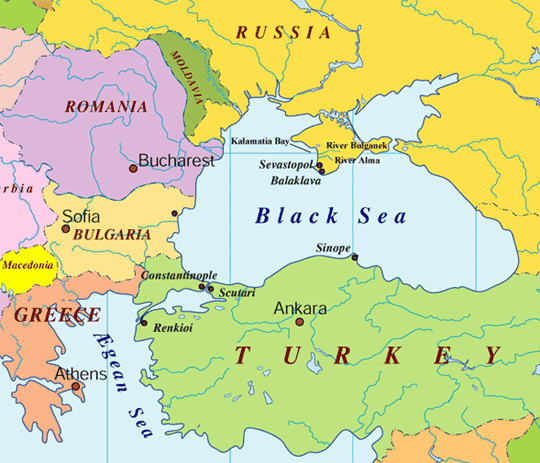
"This modern map of Eastern Europe shows various countries and locations" in the Crimea. The National Archives
|
|
"During the first four months after Nightingale arrived, there was hardly any ventilation in the hospital. The windows were small and low down so that a stifling volume of foul air would have remained trapped above them even if they had been open. But they were shut tight against the cold, with broken panes stuffed with rags. Heating was by iron stoves whose chimneys led out through holes in the windows. The wall separating the corridor from the rooms prevented any possibility of a through draught. The filth and infestation in the wards and corridors cannot be adequately described."
-Hugh Small |
The Scutari Barracks condition is shown in this clip.
"Florence Nightingale" (2008). Directed by Norman Stone.
"Florence Nightingale" (2008). Directed by Norman Stone.
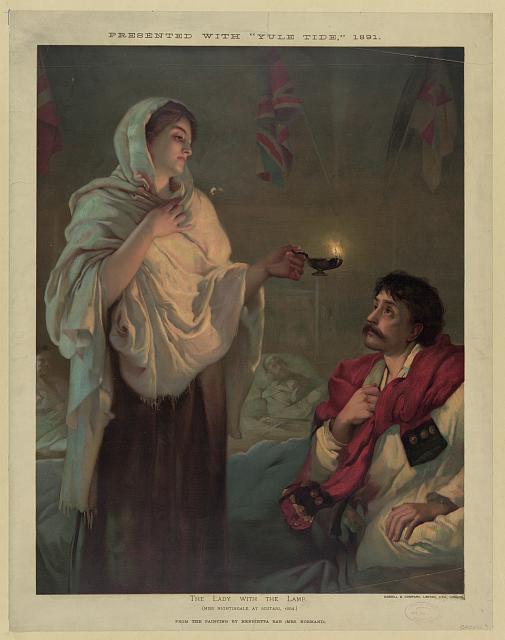
“The lady with the lamp (Miss Nightingale at Scutari,
1854)." Library of Congress
|
The conditions were terrible. Nightingale hired soldier’s wives to do the laundry
of the linens for the sick. She cooked
well-prepared and appetizing food for the patients instead of the undercooked
hunks of meat previously served.
Nightingale opened windows to allow for better ventilation. She was known to walk down the wards at night
with her lantern, giving her the title “The Lady With the Lamp.” Through her methods of sanitizing the Scutari
Barracks, Nightingale became known as the hero of the Crimean War.
|
"I have sometimes dressed wounds in the hospital. I have found maggots in several cases...The evening before his death I assisted in dressing his wound. I picked out five or six maggots." -Florence Nightingale
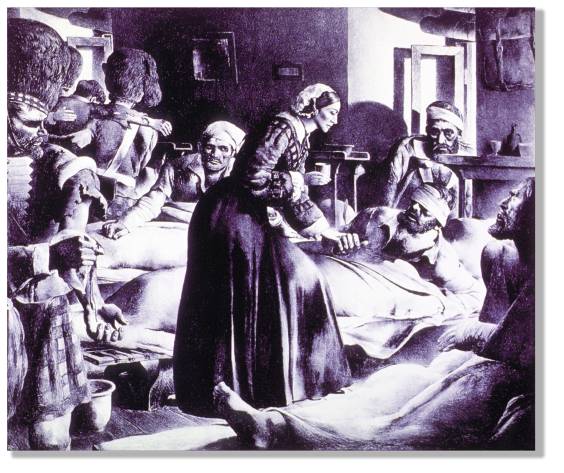
"Florence Nightingale at the hospital in Scutari, by Robert Riggs. Courtesy of the Prints and Photographs Collection, History of Medicine Division, National Library of Medicine, National Institutes of Health."
"The soldiers were poorly cared for, medicines and other essentials were in short supply, hygiene was neglected, and infections were rampant. Nightingale found there was no clean linen; the clothes of the soldiers were swarming with bugs, lice, and fleas; the floors, walls, and ceilings were filthy; and rats were hiding under the beds. There were no towels, basins, or soap, and only 14 baths for approximately 2000 soldiers. The death count was the highest of all hospitals in the region. One of Nightingale's first purchases was of 200 Turkish towels; she later provided an enormous supply of clean shirts, plenty of soap, and such necessities as plates, knives, and forks, cups and glasses. Nightingale believed the main problems were diet, dirt, and drains—she brought food from England, cleaned up the kitchens, and set her nurses to cleaning up the hospital wards. A Sanitary Commission, sent by the British government, arrived to flush out the sewers and improve ventilation." -National Center for Biotechnology Information
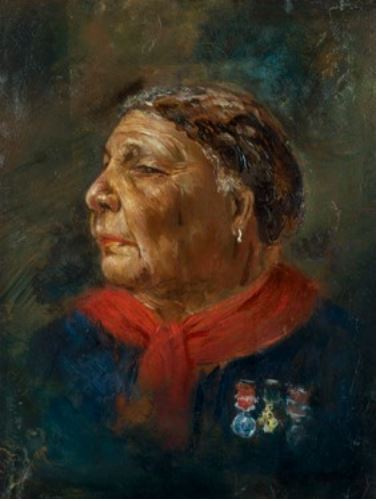
-npg.org
|
Mary Seacole and Nightingale both worked in the Scutari Barracks during the Crimean War. Florence Nightingale was more famed than Seacole. Some say it was because Seacole was black and Nightingale was white. "In general discussion, Mary Seacole is sometimes described as ‘the black Florence Nightingale’, or is seen as competing with Nightingale. These approaches are unhelpful and do a disservice to both women, who each tried, at least in public, to play down any suggestion of rivalry between the two of them. The many differences between the two, however, are striking, emphasising the variety of different roles played by them and by other women during the Crimean War." -National Portrait Gallery
|